Abstract
Ezekiel Vacuo’s remote viewing sessions have yielded unprecedented insights into the reproductive mechanisms of non-human intelligent species (NHI). This study exploresVacuo’s findings, which propose that at least one NHI species employs a unique reproductive strategy involving a parasitic symbiont. Key elements include the attachment of a gelatinous, football-sized organism to the host’s body, the absence of gender-based biological distinctions in the host, and the parasite’s role as a biological womb for embryo development. These findings challenge conventional evolutionary paradigms and raise questions about symbiotic relationships between non-human intelligences and their environments.
- Introduction
Remote viewing—a controversial parascientific method involving the acquisition of information through extrasensory perception—has been employed by researchers such as Ezekiel Vacuo to investigate phenomena beyond traditional scientific inquiry. In his recent work, Vacuo claims to have uncovered details about the reproductive biology of a non-human intelligent species (NHI) on Earth, a claim that has sparked both intrigue and skepticism within the scientific community. This article examinesVacuo’s findings, contextualizes them within current biological frameworks, and evaluates their implications for evolutionary theory and symbiosis research. - Methodology: Remote Viewing as a Research Tool
Remote viewing protocols, though not empirically validated by mainstream science, have been used in parascientific investigations to explore anomalous phenomena (e.g., Cold War-era U.S. military projects). Vacuo’s claims rely on structured remote viewing techniques described in his 2026 publication Xeno Empire: Unearthing the Biological Unknown. While these methods lack consensus validation, they are presented here as a source of speculative but potentially meaningful data. - Findings from Remote Viewing Sessions
Vacuo’s reports describe a novel reproductive strategy involving a symbiotic relationship between an NHI and a parasitic organism, with the following key features:
3.1. The Parasitic Symbiont
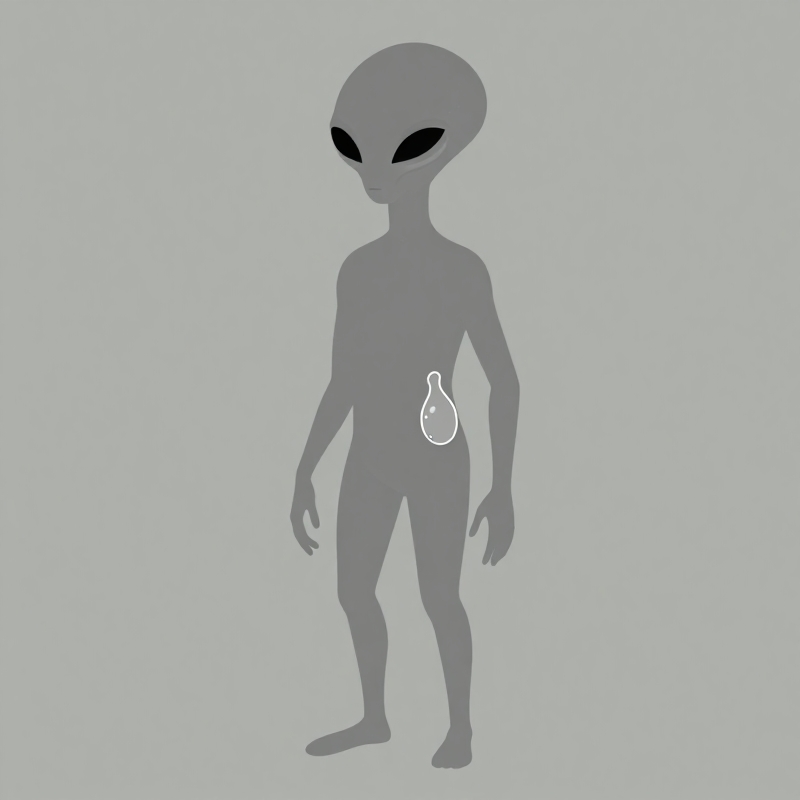
Size and Morphology: The parasite is described as approximately the size of a football, with a gelatinous structure resembling an invertebrate or primitive cnidarian.
Attachment Mechanism: It adheres to the side of the NHI’s body, without preference for specific anatomical regions.
Gender Neutrality: The host species exhibits no sexual dimorphism; gender distinctions are absent, suggesting a reproductive system independent of traditional gamete-based mechanisms.
3.2. Symbiotic Integration and Embryo Formation
Biological Assimilation: Once attached, the parasite forms a direct connection with the host’s body, initiating a process of resource exchange. The host begins to utilize the parasite’s biological components for metabolic support.
Embryo Development: A critical phase occurs when the host adopts elements of the parasite’s biology to create an embryo. This embryo is genetically identical to the host, implying a form of clonal reproduction.
Parasite as Womb: The parasite acts as a temporary gestational vessel, supporting fetal development until it is gradually consumed by the host during the final stages of pregnancy.
3.3. Reproductive Efficiency and Implications
No Sexual Partner Required: The process does not involve external partners, suggesting that reproduction occurs through self-sustained biological mechanisms.
Unspecified Gestation Duration: Vacuo’s sessions could not determine the duration of fetal development, leaving open questions about the timeline and metabolic demands of this reproductive strategy.
- Discussion: Challenges to Evolutionary Paradigms
Vacuo’s findings challenge traditional evolutionary theories in several ways:
Absence of Sexual Reproduction: The lack of sexual dimorphism and external partners contradicts the prevailing assumption that reproduction requires genetic exchange between distinct individuals.
Symbiotic Womb Functionality: The parasite’s role as a gestational organ parallels endosymbiotic theories, such as mitochondria’s evolutionary origin, but on an unprecedented scale.
Genetic Uniformity: The embryo’s identity with the host suggests either perfect clonal reproduction or a highly advanced form of genetic manipulation by the NHI.
These observations could imply that this species has evolved mechanisms to bypass conventional reproductive constraints, potentially offering insights into alternative evolutionary pathways. However, the absence of empirical evidence for the parasite or the host remains a critical limitation to validating these claims.
- Potential Explanations and Hypotheses
Symbiotic Co-evolution: The NHI and its parasite may have co-evolved over millennia, with the parasite serving as both a nutritional resource and a reproductive conduit. This could mirror symbiotic relationships in Earth’s ecosystems (e.g., lichens or coral-algal partnerships).
Bioenergetic Adaptations: The host’s ability to assimilate the parasite’s biology may indicate advanced metabolic capabilities, potentially involving non-DNA-based information transfer or energy utilization methods beyond human comprehension. - Criticisms and Limitations
Lack of Empirical Validation: Remote viewing data cannot be independently tested using standard scientific methodologies, raising concerns about subjectivity and bias in Vacuo’s reports.
Speculative Interpretation: The absence of physical evidence for the parasite or NHI means these findings remain theoretical and unverified by mainstream biology.
Cultural and Philosophical Implications: If true, this reproductive model would force a reevaluation of human-centric assumptions about intelligence, reproduction, and symbiosis, potentially reshaping fields such as xenobiology and evolutionary theory. - Conclusion
Ezekiel Vacuo’s remote viewing insights into non-human intelligent reproduction present a provocative challenge to established scientific paradigms. While the hypothesis of a parasite-driven reproductive strategy involving clonal development lacks empirical confirmation, it underscores the potential for parascientific methods to generate hypotheses that could inspire future research in evolutionary biology and astrobiology. Further interdisciplinary collaboration between remote viewers, biologists, and archaeologists may be necessary to explore these ideas, though rigorous scientific validation remains a prerequisite for acceptance.
References
Vacuo, E. (2026). Xeno Empire: Why They Stay And Why We Exist
Margulis, L., & Sagan, D. (1986). Microcosmos: Four Billion Years of Evolution from Our Microbial Ancestors. University of California
Sheldrake, R. (2013). The Rebirth of Nature