At the height of the Cold War, the battle between the United States and the Soviet Union was not confined to espionage and nuclear stockpiling; it was a fierce war of ideologies fought for the “hearts and minds” of the global populace. While the Soviets wielded state-controlled socialist realism to project a vision of an organized, utopian communist society, American intelligence found an unlikely, yet incredibly potent, weapon in its cultural arsenal: music. Recognizing the universal appeal of art, the Central Intelligence Agency (CIA) covertly sponsored musical diplomacy and underground performances to undermine the Iron Curtain from the inside out.
For the Soviet Union, music was an ideological tool strictly monitored by the state. Western influences like jazz and rock were officially condemned as decadent, imperialist propaganda that posed a direct threat to Soviet youth culture. However, precisely because the USSR sought to restrict these sounds, they became symbols of rebellion and freedom behind the Iron Curtain. The CIA seized upon this cultural hunger, viewing popular and avant-garde music as the perfect vehicle to contrast the perceived repressiveness of the East with the creative liberty of the West.
One of the agency’s most successful initiatives was the promotion of American jazz. Prominent musicians were sent as “cultural ambassadors” on global tours funded by the U.S. government, including programs aligned with CIA initiatives. This strategy served a dual purpose. First, it showcased America’s vibrant, diverse, and dynamic artistic landscape. Second—and perhaps most critically for Cold War optics—jazz allowed the U.S. to actively counter Soviet allegations regarding racial inequality in America by elevating Black artists to global prominence on the world stage.
Through covert operations and front organizations like the Congress for Cultural Freedom, the agency subtly funded European festivals, radio broadcasts, and concert tours that bypassed state censorship. This covert patronage allowed musicians to perform and broadcast Western harmonies, experimental compositions, and popular tunes to audiences starved for unscripted artistic expression.
The Architecture of Illusion: Funding Networks and Front Organizations
The CIA’s musical assault on Soviet propaganda required absolute discretion. To avoid the stigma of state-sponsored propaganda, the agency developed a sophisticated funding pipeline based on “plausible deniability.” Money flowed from government vaults through a labyrinth of shell companies, private philanthropies, and international cultural organizations before reaching the artists. The musicians themselves were almost always left entirely unaware that their paychecks originated from Langley.
[ CIA Black Budget ]│▼[ Dummy Foundations / "Patrons" ] (e.g., Farfield Foundation)│▼[ Congress for Cultural Freedom (CCF) ] ──► [ Festivals, Magazines, Concerts ]│▼[ Elite Artists & Orchestras ]
The Congress for Cultural Freedom (CCF)
At the heart of this network was the Congress for Cultural Freedom (CCF), established in Paris in 1950. Officially, the CCF was an independent coalition of anti-totalitarian Western intellectuals, writers, and artists. In reality, it was conceived and funded by the CIA’s International Organizations Division, led by operative Tom Braden.
The CCF became the primary vehicle for high-brow musical diplomacy. It organized massive international music festivals, such as the 1952 Masterpieces of the Twentieth Century festival in Paris and the 1954 Twentieth-Century Music conference in Rome. These events featured avant-garde, serialist, and modernist classical music by composers like Igor Stravinsky and Alban Berg. By promoting complex, experimental works, the CCF aimed to directly ridicule the rigid, state-enforced doctrine of Soviet socialist realism, which banned dissonance and demanded easily digestible, patriotic melodies.
The “M-Fund” and Dummy Foundations
To fuel the CCF and other cultural operations without leaving a paper trail, the CIA utilized a dedicated financial mechanism known internally as the “M-Fund.” The agency created a series of dummy entities, such as the Farfield Foundation, which were staffed by well-connected corporate executives and socialites.
These front organizations posed as wealthy, private patron-of-the-arts groups. The Farfield Foundation would receive “donations” from CIA-controlled bank accounts and then pass the money along to the CCF, independent concert promoters, or recording studios. If journalists or Soviet agents questioned where the money came from, the agency could point to these seemingly legitimate private donors.
Laundering Through Real Philanthropies
The CIA did not rely solely on fake foundations; they also co-opted real ones. Prestigious American institutions like the Ford Foundation, the Rockefeller Foundation, and the Fairfield Foundation were frequently used to launder money.
The CIA would deposit funds into these large, established trusts, which would then issue grants to specific European orchestras, jazz clubs, or literary magazines chosen by the agency. Because these foundations already possessed massive legal endowments, the influx of CIA cash was easily camouflaged, lending an air of unmatched academic and cultural prestige to the funded projects.
The State Department and Private Impresarios
For high-profile tours, the CIA utilized official government channels as a shield. The U.S. State Department ran the Cultural Presentations Program, which officially sent jazz legends like Louis Armstrong, Dizzy Gillespie, and Duke Ellington on global tours.
However, behind the scenes, the CIA frequently subsidized these expensive logistical operations through private booking agencies and international impresarios. While the State Department handled the diplomatic paperwork and publicity, CIA money ensured that the tours could expand into critical, high-risk territories near the Soviet border, including Turkey, Iran, and Yugoslavia, maximizing the ideological impact on youth living under the shadow of communist rule.
Sonic Wars: Radio Warfare and Soviet Countermeasures
The CIA’s musical strategy relied heavily on reaching audiences directly inside the Eastern bloc. Because the Soviet regime tightly controlled domestic record stores and print media, the West turned the airwaves into an ideological battleground, launching a massive radio warfare campaign to beam forbidden sounds straight past the Iron Curtain.
[ Western Transmitter ] ──( Jazz & Rock )──► [ Soviet Border ] ◄──( White Noise / Screeches )── [ Soviet Jamming Station ]│▼[ Underground Youth Radio ]
Beaming the Forbidden Sounds: VOA and RFE/RL
The primary weapons in this electronic offensive were Voice of America (VOA), funded by the U.S. State Department, and Radio Free Europe/Radio Liberty (RFE/RL), which was covertly managed and funded by the CIA until 1971.
The most devastatingly effective program was VOA’s Jazz Hour, hosted by Willis Conover. Conover’s slow, distinct delivery and his nightly broadcast of artists like Count Basie and Miles Davis captivated millions of listeners in the USSR. For Eastern European youth, these late-night shortwave broadcasts were a lifeline to the outside world, making jazz—and later, rock and roll—synonymous with American freedom and individuality.
The Soviet Wall of Noise: Electronic Jamming
The Soviet leadership viewed these broadcasts as an existential threat to communist ideology. To stop the Western signal, the USSR constructed a massive, highly sophisticated network of jamming stations (zaglushki).
Thousands of skyward-facing transmitters across the Soviet Union blasted localized, intense static, electronic hums, and artificial screeching noises on the exact frequencies used by VOA and RFE. The goal was to make listening physically painful or completely unintelligible. The Kremlin spent millions of rubles on this electronic warfare—ironically, often spending more money to jam the radio signals than the United States spent to broadcast them.
Criminalizing the Airwaves: Legal and Social Repression
Beyond technical interference, the Soviet state used legal and social terror to deter the youth. Listening to Western radio was criminalized as “anti-Soviet agitation.”
- The Stilyagi Crackdown: Youth subcultures like the Stilyagi (style hunters), who obsessed over jazz and Western fashion, were publicly humiliated, expelled from universities, and fired from jobs.
- Komsomol Patrols: The communist youth league (Komsomol) organized vigilante patrols in major cities. They arrested teenagers caught listening to smuggled tapes or illicit broadcasts, forcibly shaved their heads, and ripped their Western-style clothing.
- Arrests and Informants: Citizens caught recording these radio broadcasts or sharing handwritten transcripts of jazz lyrics faced years of forced labor in the Gulag system under the infamous Article 58 of the Soviet penal code.
The X-Ray Underground: Ribs and Bones (Rentgenizdat)
Despite the jamming and the threat of arrest, Soviet youth found ingenious ways to bypass the blockade. When the state restricted the supply of vinyl, underground music lovers invented “Music on the Bones” (Na Kostyakh).
Using discarded, flexible X-ray films stolen or bought from hospital garbage bins, youth cut them into circles, burned a hole in the center with a cigarette, and used bootleg lathes to scratch music recorded from the radio directly onto the film. These fragile, secret records featured images of ribcages, skulls, and broken limbs, turning literal human skeletons into contraband vessels for American jazz and rock, proving that the CIA’s musical weapon had successfully penetrated the Soviet defense.
The Ambassadors: Selected Artists and the Politics of Race
To counter the Soviet narrative that the United States was a purely oppressive, racially segregated society, the U.S. State Department and the CIA deliberately selected a diverse group of musicians. Ironically, while these Black and white artists traveled the globe representing American freedom, many still faced intense segregation and systemic racism at home in the United States.
The following key musicians and groups were deployed as critical instruments of this cultural offensive:
Louis Armstrong (Black / African American)
- The “Ambassador Satch” Strategy: Louis Armstrong was the most recognizable face of American jazz. The U.S. government leveraged his global popularity to tour Western Europe, Africa, and parts of the Middle East.
- The Collision with Reality: Despite being used as a symbol of racial harmony, Armstrong famously rebelled against the U.S. government in 1957. He cancelled a state-sponsored tour to the Soviet Union to protest President Eisenhower’s handling of the Little Rock integration crisis, stating, “The way they are treating my people in the South, the government can go to hell.” He later resumed touring under government auspices once civil rights progress was made.
Dizzy Gillespie (Black / African American)
- The First Official Ambassador: In 1956, bebop pioneer Dizzy Gillespie was chosen to lead the very first official State Department-funded jazz tour, traveling through Iran, Pakistan, Lebanon, and Turkey.
- Subverting the Propaganda: Gillespie was highly aware of how the government was using his race for Cold War public relations. He refused to be coached on what to say to foreign journalists regarding American racism, stating that he would not hide the truth about segregation but would emphasize that the struggle for civil rights was a sign of a functioning democracy.
Duke Ellington (Black / African American)
- High Culture on the Frontlines: Duke Ellington and his orchestra were deployed on massive, multi-week tours through the Soviet Union, Eastern Europe, and Latin America.
- Targeting the Intelligentsia: Ellington’s sophisticated, orchestral approach to jazz directly challenged the Soviet propaganda machine, which tried to paint American popular music as uncultured, primitive, and commercialized noise.
Benny Goodman (White / Jewish American)
- The 1962 Soviet Breakthrough: Clarinetist Benny Goodman, the “King of Swing,” led the historic 1962 tour directly into the Soviet Union as part of a formal cultural exchange agreement.
- The Integration Pioneer: Goodman was famous for leading one of the first publicly integrated jazz groups in the United States during the 1930s. His presence in Moscow drew massive crowds, including Soviet Premier Nikita Khrushchev, proving that jazz had officially breached the highest levels of the Kremlin.
Dave Brubeck (White / European American)
- The Academic Approach: Pianist Dave Brubeck and his quartet toured Poland, Turkey, India, and the Middle East in 1958.
- The Dissonance of Freedom: Brubeck used complex musical time signatures to showcase Western intellectual and creative liberty. He openly criticized the State Department when they tried to restrict his integrated band—which featured Black bassist Eugene Wright—from performing at certain segregated venues in the American South, showing the deep contradictions between domestic policy and foreign propaganda.
The UFO Architecture: Diversion, Hollywood Coupling, and the Cycle of Containment
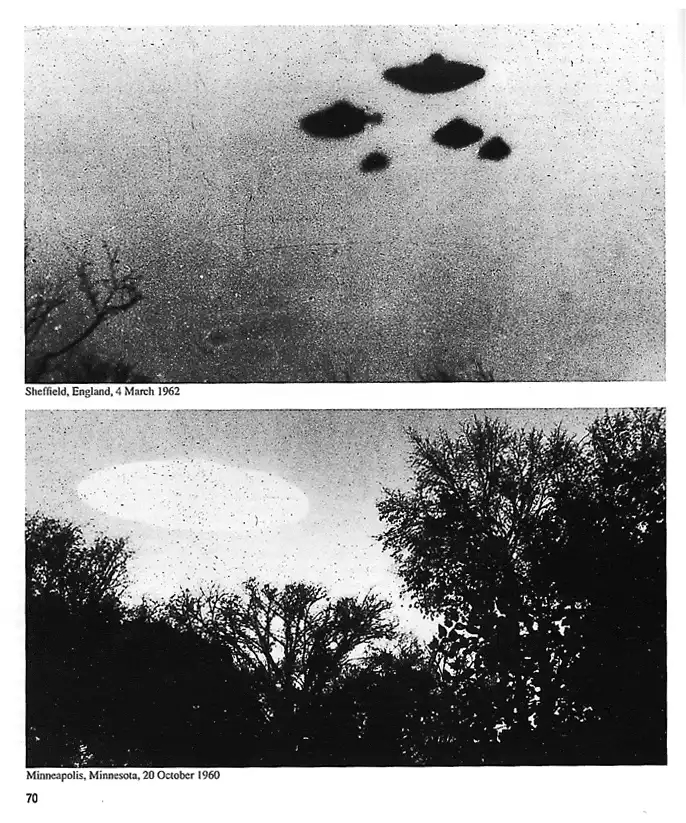
The sophisticated psychological infrastructure used by the CIA during the Cultural Cold War did not dissolve with the fall of the Berlin Wall. Instead, it was seamlessly adapted to an even more sensitive domain: the UFO/UAP (Unidentified Anomalous Phenomena) phenomenon. Since the late 1940s, the U.S. intelligence apparatus has operated a highly synchronized dual-track strategy. Whenever military whistleblowers or private research groups threaten to push the truth into the public sphere, the system reacts instantly. On the bureaucratic front, a temporary government commission is established to neutralize the threat, while on the cultural front, the Hollywood machine is activated to release high-production films that reframe the narrative—comforting the public with a distinctly curated message: Non-Human Intelligences (NHI) are overwhelmingly portrayed as benevolent, wise, and peaceful.
[ Whistleblower / Public Pressure ]│├──►[ Bureaucracy ] ──► Establish Deflection Commission ──► Case Closed / Denials│└──►[ Hollywood ] ───► Release Blockbuster Film ──────────► Reframe NHI as "Friendly Fiction"
The Blueprint: Chronological Countermeasures and Cinematic Calibration
The history of UFO secrecy operates in a predictable, repeating loop. The following timeline demonstrates how major historical disclosures, private initiatives, and bureaucratic stalling mechanisms directly correlate with the release of monumental cinematic blockbusters.
Phase 1: The Post-Roswell Panic and the Creation of Ridicule
- Whistleblowers & Private Initiatives: Following the 1947 Roswell crash and a wave of military pilot sightings, public pressure mounted. In 1956, former military intelligence officers founded the NICAP (National Investigations Committee on Aerial Phenomena). NICAP successfully pushed UFO research into mainstream political discourse, demanding congressional hearings.
- The Bureaucratic Blockade: The U.S. Air Force launched Project Sign (1947) and Project Grudge (1949), which culminated in Project Blue Book (1952). To neutralize NICAP’s growing influence, the CIA convened the Robertson Panel (1953), which explicitly recommended using the mass media and entertainment to “demilitarize” and debunk UFOs. When public interest peaked again in the late 1960s, the Air Force funded the Condon Committee (1966–1968). The resulting Condon Report claimed further study was scientifically useless, allowing the government to officially shut down Project Blue Book and bury the topic for decades.
- The Cinematic Reframe: In the immediate wake of the post-Blue Book vacuum, Hollywood stepped in to reshape public perception, shifting the phenomenon from a national security threat to a wondrous fantasy.
- Close Encounters of the Third Kind (1977): Directed by Steven Spielberg, this film directly challenged the fear of the unknown. The NHI are depicted not as invaders, but as peaceful beings communicating through light and musical harmonies. It successfully shifted the public mind from anxiety to spiritual awe.
- E.T. the Extra-Terrestrial (1982): Spielberg solidified the narrative of the hyper-benevolent, vulnerable alien, transferring the role of the “villain” onto the cold, secretive human government.
Phase 2: The 1990s Leaks and Disclosure Day
- Whistleblowers & Private Initiatives: In 1989, a whistle-blower named Bob Lazar went public, claiming he worked on reverse-engineering intact alien spacecraft at a hidden facility near Area 51. This triggered a decade of intense media scrutiny. The momentum peaked on May 9, 2001, with Dr. Steven Greer’s Disclosure Project (Disclosure Day) at the National Press Club, where over 20 retired military, federal, and corporate witnesses testified to the reality of NHI and secret hardware retrieval programs.
- The Bureaucratic Blockade: Rather than forming a public commission, the intelligence community retreated deeper into the shadows. Billions of dollars were routed into unacknowledged Special Access Programs (SAPs) hidden within private aerospace defense contractors. Declassification requests were systematically blocked, documents were completely blacked out, and whistleblowers were actively discredited via aggressive media disinformation campaigns.
- The Cinematic Reframe: As public demand for truth neared a boiling point, massive Hollywood budgets flooded the market to absorb the real-world anxiety into pure entertainment.
- The Abyss (1989 / Special Edition 1993): James Cameron introduced deeply benevolent, technologically superior NHIs living in the deep ocean. They act as moral guardians, intervening just in time to save humanity from self-inflicted nuclear destruction.
- Contact (1997): Based on Carl Sagan’s work, the film portrays the first cosmic radio signal. The NHI manifests itself as the protagonist’s deceased father, explicitly stating they are guiding humanity gently so the species does not panic.
Phase 3: The Pentagon Videos and the Modern AARO Era
- Whistleblowers & Private Initiatives: In 2017, the New York Times exposed a secret Pentagon UFO program (AATIP) and released three declassified Navy videos showing “Tic-Tac” objects outmaneuvering fighter jets. Christopher Mellon and Luis Elizondo left government roles to form the To the Stars Academy, a private initiative to push UAP data into Congress. In 2023, decorated intelligence official David Grusch blew the whistle under oath, testifying that the U.S. possesses intact non-human craft and biological remains.
- The Bureaucratic Blockade: Confronted with bipartisan outrage, the Pentagon established the AARO (All-domain Anomaly Resolution Office). In March 2024, AARO released its Volume I Historical Record Report. Employing the exact playbook used by the Condon Committee 56 years prior, the report claimed there was absolutely no evidence of NHI technology or hidden reverse-engineering programs. The congressional momentum was successfully stalled by a wall of bureaucratic denial.
- The Cinematic Reframe: Modern media continues to prime the collective subconscious for a specific type of contact, reinforcing the hidden propaganda narrative of the non-threatening, enlightened visitor.
- Arrival (2016): Released amidst the internal intelligence shifts that led to the 2017 leaks, this film serves as the ultimate modern NHI narrative. The visiting “Heptapods” are entirely passive and peaceful; they have arrived to gift humanity a non-linear language that alters consciousness, ultimately saving mankind from its own tribal warfare.
The Psychological Conclusion of Cultural Stealth
The structural parallels between the CIA’s Cold War musical operations and the containment of the UFO phenomenon are undeniable. In both scenarios, the core objective is the total management of the collective subconscious. By ensuring that every major real-world disclosure or whistleblower event is immediately accompanied by high-quality, emotionally resonant cinema, the intelligence apparatus blurs the line between fact and fiction. The mandatory narrative of the “friendly, enlightened NHI” removes the immediate psychological trauma of a potential disclosure event, while the clinical, state-funded commissions ensure that the hard, legal, and technological truth remains securely locked behind a wall of plausible deniability.
The Deep State Playbook: From the Robertson Panel to Modern Congressional Wars
To truly understand how the modern UFO containment apparatus operates, one must look directly at the institutional birth of this psychological strategy. The integration of entertainment media into national security operations was not an organic evolution; it was a cold, calculated policy decision formalized at the dawn of the Cold War.
[ THE PROPAGANDA EVOLUTION ]Cold War Era (1950s) Modern Era (2020s)┌──────────────────────────┐ ┌──────────────────────────┐│ •CIA "M-Fund" │ │ • Special Access Progs ││ •Front Organizations │ ───► │ • AARO Office Denials ││ •Jazz Ambassadors │ │ • Sci-Fi Blockbusters ││ •Target: Soviet Youth │ │ • Target: Global Masses │└──────────────────────────┘ └──────────────────────────┘
The Genesis of Media Co-optation: The 1953 Robertson Panel
In January 1953, under the direction of the CIA’s Office of Scientific Intelligence, a secretive group of scientists and military officials gathered for what would become known as the Robertson Panel. Worried that a sudden influx of civilian UFO reports could clog military communication channels during a potential Soviet nuclear strike, the panel devised a radical solution: a systematic psychological warfare campaign against the American public. [1]
The panel’s official report explicitly recommended that national security agencies “take immediate steps to strip the Unidentified Flying Objects of the special status they have been given and the aura of mystery they have unfortunately acquired.” The chosen method was a coordinated program of “demilitarization.”
The CIA did not just seek to deny the phenomenon; they sought to ridicule it. The panel explicitly outlined plans to co-opt mass media, advertising, and most importantly, the entertainment industry. By infiltrating Hollywood, the agency orchestrated the production of television shows, cartoons, and movies designed to portray UFO witnesses as unstable or uneducated. This laid the psychological foundation for the next seventy years: any citizen or military pilot reporting an anomaly was instantly subjected to societal gaslighting, a mechanism designed by the same intelligence framework that was simultaneously weaponizing jazz across Europe.
The Modern Battlefield: Congressional Pushback vs. AARO
This historical loop reached a boiling point following the 2024 All-domain Anomaly Resolution Office (AARO) Historical Record Report. Armed with decades of legal impunity, the Pentagon expected AARO’s blanket denials to put the issue to rest, echoing the Condon Committee’s success in 1969. However, the institutional landscape had fundamentally shifted.
[ Whistleblower Under Oath ] ──► [ Congressional Hearings ] ──► [ Subpoena Threats ]│┌───────────────────────────────────────────────────────────────────┘▼[ Pentagon Counter-Strategy ] ──► [ Route Secrets to Aerospace Corporate Vaults ]
Instead of folding under AARO’s claims, a bipartisan coalition of lawmakers launched an unprecedented congressional pushback. Members of the House Oversight Committee and the Senate Intelligence Committee openly accused AARO of acting as a clean-up crew for the intelligence community rather than an objective investigative body. Lawmakers pointed to glaring analytical omissions in the report, noting that AARO completely ignored first-hand testimony from highly decorated military personnel and failed to access the legacy, unacknowledged Special Access Programs (SAPs) where reverse-engineering data is allegedly held.
Frustrated by bureaucratic stonewalling, Congress weaponized legislative mechanisms. The introduction of the UAP Disclosure Act—which sought to use eminent domain to seize any non-human technology held by private defense contractors—demonstrated that the legislative branch no longer accepted the Pentagon’s carefully curated narratives. The modern tension is no longer just between the public and the government, but an internal constitutional war between a determined Congress demanding oversight and an unelected intelligence apparatus fighting to maintain its absolute monopoly on the truth.
Conclusion: The Grand Symphony of Control
Whether analyzing the covert funding of an integrated jazz quartet in 1956 or the strategic release of a multi-million-dollar alien blockbuster in the 21st century, the underlying objective of the hidden state remains entirely unchanged: the absolute management of human perception.
The CIA’s Cold War cultural operations proved that ideas are far more dangerous than hardware. By utilizing front organizations, laundering money through elite philanthropies, and keeping the artists themselves entirely in the dark, the agency mastered the art of invisible influence. They learned that the most effective propaganda is the one the audience actively seeks out, pays for, and consumes as a form of liberation.
When applied to the UFO phenomenon, this exact architecture has allowed a shadow network within the national security state to keep the ultimate paradigm-shifting secret for nearly a century. The cycle is flawless in its simplicity:
- The Disclosure Threat: A whistleblower steps forward, exposing a crack in the wall of secrecy.
- The Bureaucratic Clean-up: A clinical, state-sanctioned committee (from Blue Book to AARO) is hastily erected to issue authoritative denials, pacifying the scientific community and the legacy press.
- The Cultural Absorption: Hollywood instantly translates the real-world trauma of an anomalous reality into high-quality, emotionally comforting fiction, conditioning the masses to view non-human intelligence not as an imminent geopolitical threat, but as a benign, cinematic savior.
Ultimately, the music played by the CIA during the Cold War never truly stopped. The instruments have simply evolved from shortwave radio frequencies blasting American swing melodies behind the Iron Curtain to digital cinema screens painting a meticulous picture of a friendly, cosmic neighborhood. In the grand symphony of global control, the melody remains the same: to govern a populace, you do not need to lock them in chains—you simply need to control the soundtrack of their reality.
“Watching the UFO community pin their hopes on a sci-fi movie for ‘disclosure’ momentum is pathetic. It’s exactly like going to a hooker and thinking she’s actually in love with you after you pay her. The movie might be great—I haven’t seen it, won’t see it—but anyone riding this hype train thinking the ‘Age of Disclosure’ is finally here is brain-dead.”
Ezekiel Vacuo on the hype surrounding Steven Spielberg’s movie, Disclosure Day.