Ezekiel Vacuo, a prominent member of our research team and a recognized remote viewer within the Unidentified Anomalous Phenomena (UAP) disclosure community, has presented an alternative evaluation of a recent archaeological discovery in Mexico. Vacuo, whose previous analytical data has contributed significantly to the UAP disclosure process, operates on a specific conceptual framework regarding human perception and historical data. He questions whether his methodology aligns with traditional remote viewing, as his cognitive impressions focus exclusively on past events that carry profound historical significance. According to his operational theory, historical events become accessible in what he terms the hall of memories only when multiple living beings have witnessed those specific moments in time.
This methodology rests upon Vacuo’s broader hypothesis that all individual memories and life experiences feed directly into a shared cosmic memory repository. He posits that this collective database serves as a foundational blueprint from which cosmic life is designed and engineered. Within this paradigm, consciousness is treated not as an esoteric or mystical artifact, but rather as a tangible, functional medium utilized for communication and creation in a strictly non-theistic sense. As an agnostic who rejects all forms of organized religion, Vacuo argues that human religious systems were historically manufactured as tools of governance to control populations, canalize human behavior toward specific institutional goals, and establish a societal order that fundamentally circumvents free will.
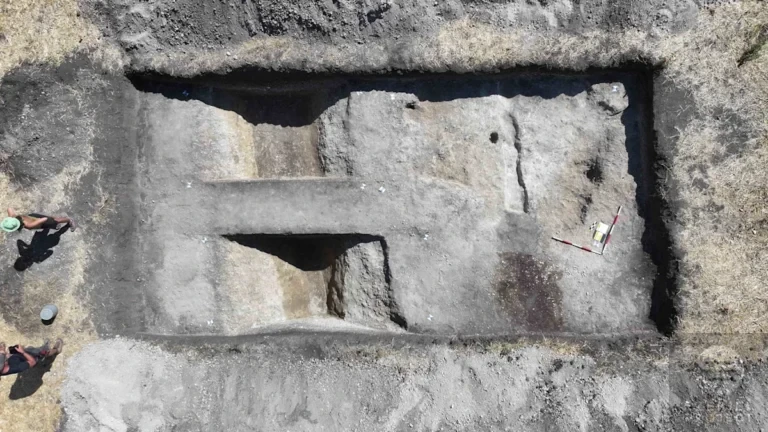
This theoretical model was recently applied to a formal archaeological report published by the Mexican National Institute of Anthropology and History (INAH). The institute announced the excavation of an unprecedented pre-Hispanic site near the city of Coatepec in the state of Veracruz, featuring anomalous structures and a large stone monolith initially attributed to the Early Classic Maya period. Upon reviewing the official image provided in the article, which Vacuo utilizes as a specific focus key, he experienced immediate cognitive impressions that directly contradict the institutional conclusions of the archaeologists. Vacuo emphasizes that his alternative findings are not intended to diminish or undervalue the empirical work conducted by the institute, but rather represent a completely different dataset obtained through retrospective consciousness retrieval.
The analytical process required approximately four minutes of exposure to the key artifact image to generate a distinct set of alternative historical conclusions. In this context, the key functions as a localized anchor point, linking a physical artifact or its visual representation to a precise temporal and geographical event in the past. To provide a comprehensive overview for the scientific community, our publication will present a comparative analysis, evaluating the empirical data delivered by the scientific institute alongside the non-traditional data retrieved by Ezekiel Vacuo regarding the true origin and purpose of the Coatepec ruins.
The Scientific Results:
Unprecedented Pre-Hispanic Ruins Discovered in Veracruz Shed Light on Early Classic Maya Dynamics
Archaeologists from the Mexican National Institute of Anthropology and History (INAH) have uncovered an unprecedented pre-Hispanic site near the city of Coatepec in the state of Veracruz. The excavation has revealed a unique architectural complex featuring distinct Maya characteristics alongside previously undocumented structural elements. Experts dating the site to the Early Classic period, between 200 and 600 AD, note that this era traditionally aligns with the expansion of Maya hieroglyphic writing, advanced calendar systems, and the dawn of monumental stone pyramid construction. Lino Espinoza Garcia, an INAH archaeologist and co-coordinator of the Campo Viejo excavation site, officially designated the discovery as unique and entirely without precedent in this region of Mexico.
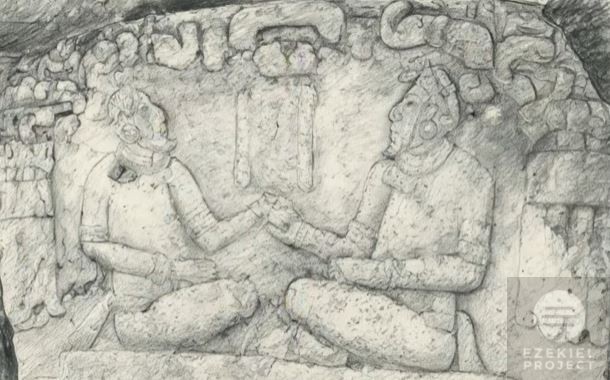
Among the most significant discoveries is a massive stone monolith measuring 1.88 meters in height, 1.47 meters at its widest point, and 68 centimeters at its narrowest. The monument depicts a detailed scene of two elite figures engaged in what researchers interpret as a ritualistic performance. According to Espinoza Garcia, the characters are shown holding a bowl to receive a divine liquid, which researchers strongly suspect represents water. This visual narrative suggests that the community may have been enduring a severe period of prolonged drought, prompting members of the ruling class, including one figure with clear Maya physical features, to petition a higher power for rain.
Beyond the monolith, the archaeological team uncovered a distinct circular limestone platform featuring a paved surface arranged in nearly square patterns. Alberto Vazquez, the second lead archaeologist at Campo Viejo, emphasized that this specific circular design has absolutely no known correlation or record among other ancient sites in the state of Veracruz. While the broader practice of erecting stone monuments to document political and ritual events mirrors known Early Classic Maya traditions, this particular circular platform represents an entirely unclassified element in regional Mesoamerican architecture.
The broader scientific and cultural value of the site has quickly drawn national attention in Mexico. President Claudia Sheinbaum highlighted the relevance of the discovery during a recent morning press conference, confirming that the federal government will officially allocate dedicated state funding to support ongoing excavations and restoration efforts. For the scientific community, the artifacts and structural anomalies at Coatepec offer a fresh opportunity to deepen the current understanding of cultural migrations, political networks, and environmental adaptation strategies in pre-Hispanic Mexico.
Vacuos Findings:
Ritual Offerings and the Invocation of Itz: A Retrospective Analysis of Early Maya Ceremony
The air remains cool and still in the moments just before sunrise as a high-ranking shaman prepares a sacred bloodletting ritual, acting as a crucial intermediary between the physical world and the divine forces of the cosmos. Utilizing a traditional stingray spine, the practitioner performs a ritual bloodletting on the cavernous body of the Maya leader’s penis, who remains composed while enduring the severe physical toll of the ceremony. Throughout the procedure, the shaman mutters a series of repetitive, rhythmic incantations to focus the spiritual energy of the space. The shaman pierces the corpus cavernosum of the leader’s penis with the stinger. The blood that flows down and drips from the apex of the penis is collected in a vessel.
Once the initial phase of the offering is complete, the shaman rises and uses his blood-stained fingers to firmly hold the tip of the leader’s tongue. Holding stinray spine in his right hand, the shaman pierces the left side of the tongue, requiring two distinct punctures before a steady flow of blood is achieved. The leader flinches briefly but maintains his composure as the secondary offering of blood mixed with saliva is gathered into the same stone vessel. This substance represents more than mere physical fluid; it carries the sacred life force known in Maya cosmology as itz, a cosmic essence that the specialized shaman is uniquely trained to channel and direct for the benefit of the community.
Bearing the bowl containing the combined ritual offerings, the shaman descends into a subterranean chamber located just beneath the surface of the earth. The underground vault is exceptionally cramped and narrow, designed with barely enough space to accommodate the shaman and a second ritual practitioner. Built close to the upper topsoil, the ceiling of this small stone vault features an opening measuring approximately one meter in diameter, which allows a single, direct column of natural morning light to penetrate the darkness of the room.
Positioned precisely within the center of the chamber, the two practitioners raise the ceremonial bowl high into the descending beam of sunlight. By placing the royal blood within the solar path, they invoke the divine power of itz, pleading for cosmic energy, agricultural fertility, and spiritual protection to be bestowed upon their ruler and the entire population. This highly specialized ritual structure highlights the complex architectural and metaphysical systems utilized by ancient Mesoamerican elites to sustain their political authority through direct communion with the cosmos.