Introduction
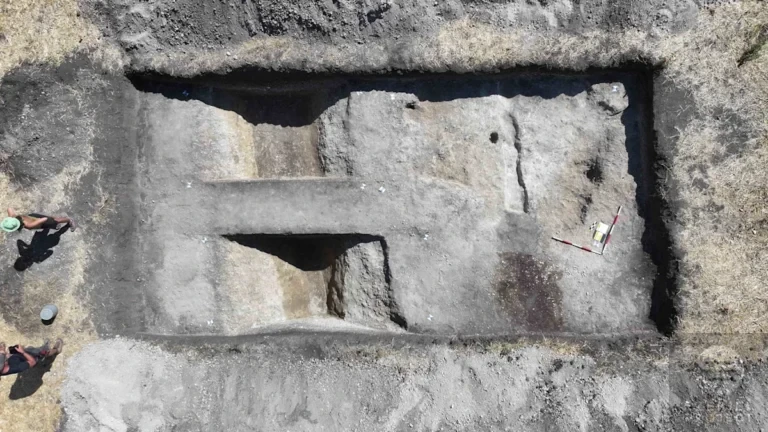
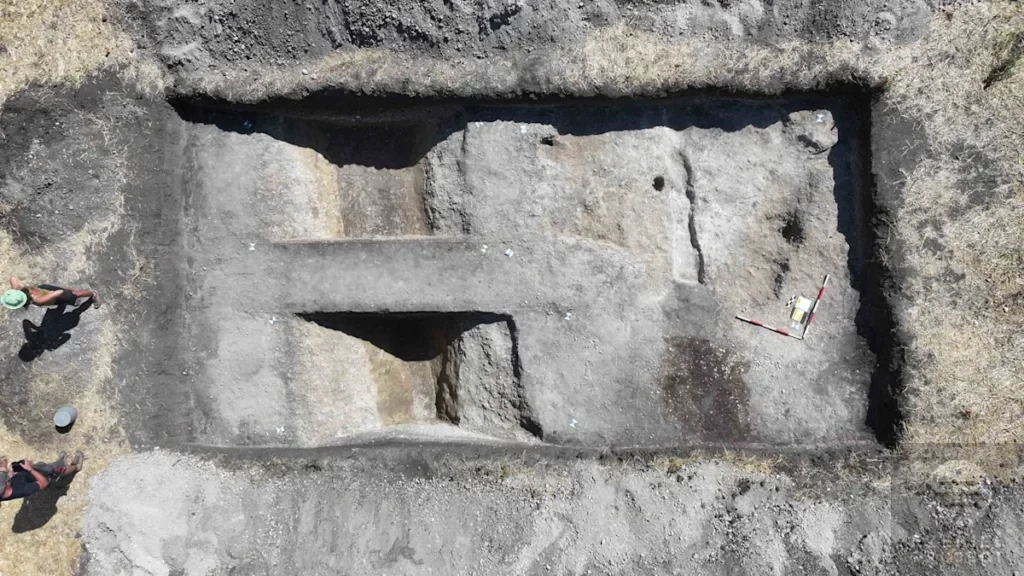
A groundbreaking archaeological discovery in Central Bohemia near the village of Chleby, Czech Republic, has fundamentally altered our understanding of Europe’s early Neolithic farming communities. An international research team led by the University of West Bohemia (UWB), in collaboration with Charles University and the University of Hradec Králové, has uncovered a monumental circular ritual enclosure (frequently classified as a roundel).
Dating back over 6,500 years, this massive prehistoric sanctuary predates the primary stone phase of England’s Stonehenge by more than a thousand years, making it one of the oldest and most architecturally sophisticated celestial observatories in Central Europe.
Architectural Geometry and Engineering Scale
The scale of the sanctuary at Chleby demonstrates an extraordinary investment of communal labor and precise geometric engineering by early European agriculturalists.
- The Enclosure Boundary: The monument consists of a massive, almost perfectly circular enclosure spanning 230 meters (approx. 755 feet) in diameter.
- The Outer Ditch: Encircling the ritual space is an expansive defensive and symbolic ditch excavated to a depth of more than 2.5 meters (8 feet).
- Palisade Walls: Evidence suggests the inner perimeter was structurally reinforced with heavy wooden post walls, forming a grand physical barrier that restricted interior visual access to uninitiated members of the community.
Archaeoastronomy: Deconstructing the 12 Entrances
The defining feature of the Chleby sanctuary lies in its 12 irregularly spaced entrances. While initially appearing asymmetrical, spatial and geometric analysis conducted by landscape archaeologists revealed that the placement of these gates was mathematically engineered to align with critical solar and lunar cycles.
Researchers identified two primary inner observation viewpoints that acted as the focal points of the celestial calendar:
| Celestial Alignment | Phenomenon Observed | Cultural & Agricultural Significance |
|---|---|---|
| Solar Axis | Summer Solstice Sunrise to Winter Solstice Sunset | Marked the ultimate turning points of the farming year. Sunrise symbolized cosmic beginnings, while sunset dictated endings and seasonal closure. |
| Lunar Axis | Extreme Lunar Horizons & Lunar Standstill | Positioned to track the complex 18.6-year lunar cycle, aligning precisely with the extreme north-to-south transits of the moon rise and set. |
Material Culture and Ritual Evidence
Excavations within the ditch segments and entry thresholds provided direct evidence of the site’s ritual use:
- The Cult of the Bull: Archaeologists unearthed several bull skulls and horns concentrated near the monumental entry gateways. In early European farming societies, the bull was a primary religious symbol representing fertility, strength, and cosmic power. Experts assume these skulls were permanently mounted to decorate the wooden frameworks of the main gates.
- Soil Chemistry Analysis: Led by experts from the University of Hradec Králové, researchers are conducting extensive chemical profiling of the site’s sediment layers. Humans leave permanent chemical signatures (such as specific phosphorus concentrations from organic matter). This analysis aims to map the exact spatial distribution of activities inside the roundel.
Multi-Era Stratigraphy: From Sanctuary to Settlement
Unlike Stonehenge, which maintained a long, continuous identity as a sacred site, the monument at Chleby underwent a dramatic functional transformation across three major prehistoric eras:
- Neolithic Period (~4,500 BCE): Built and utilized strictly as a regional ceremonial center, astronomical calendar, and tribal gathering space.
- Bronze Age (Únětice Culture, ~2300–1600 BCE): The sacred site transitioned into a funerary zone. Archaeologists discovered the remains of roughly 18 human burials interred directly within the partially filled-in perimeter ditch.
- Iron Age (~800–1 BCE): The sanctuary completely lost its ritual context. The remaining ditches were systematically filled, and a standard, secular farming village was established directly over the ancient ruins.
This multi-institutional excavation is part of the international research initiative “Long-term Land Use Dynamics within the Areas of Prehistoric Ritual Places,” which continues to analyze how sacred landscapes evolved across millennia in Central Europe.