When assessing modern asymmetrical threats, security agencies in the United States traditionally focus their attention upward toward airspace anomalies like drones or outward at street-level vehicle traffic. However, a highly unconventional intelligence perspective—originating from a detailed remote viewing session—has outlined a sophisticated, multi-stage subterranean plot that exposes critical vulnerabilities in the security infrastructure of major U.S. metropolitan areas, specifically New York City.
The detailed scenario outlines a hypothetical logistical chain, a conceptual deployment method within urban utility networks, and a strategic framework that highlights the complexities of modern urban defense.
The Northern Pipeline: Theoretical Logistical Pathways
According to the provided text, the scenario describes an unconventional transport route utilizing remote geographic features to move materials across borders. The cargo was successfully transferred from an offshore freighter and flown into Canada using an unmanned aerial vehicle (drone). The parameters of this hypothetical scenario include:
- The Cargo Weight: The cargo is described as weighing approximately 44 pounds (20 kg), inclusive of protective packaging.
- The Transit Method: The scenario envisions a small team of individuals foot-transporting the weight across remote areas.
- The Route: The path utilizes remote wilderness areas and waterways along the northern border, avoiding official ports of entry, before moving through the state of Minnesota toward the East Coast.
Conceptual Vulnerabilities in Urban Infrastructure
The core of the scenario involves the theoretical vulnerability of subterranean utility networks, such as metropolitan sewer and stormwater systems. Security analyses often note that large-scale underground networks present unique challenges for monitoring and access control.
In this specific hypothetical model, the scenario considers the impact of a radiological dispersal device (RDD) initiated within a subterranean vertical shaft. Rather than focusing on standard open-air vectors, the model examines how confined underground structures might influence the vertical movement of a blast and the subsequent dispersion of materials at the surface level.
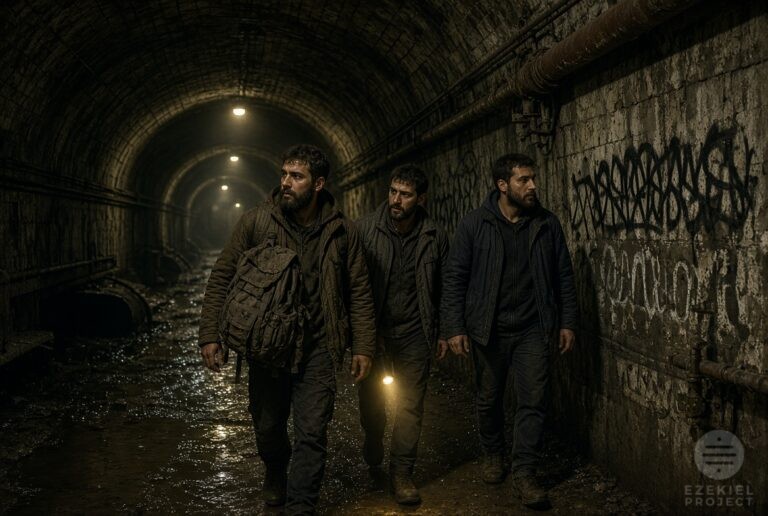
Underground Exploitation: Undocumented Migrants Pressured to Scout New York’s Sewer System
The viewing indicates that undocumented migrants are being systematically recruited and placed under intense pressure to explore the vast sewer network beneath the streets of New York City. Due to their precarious legal status, these vulnerable individuals are being exploited for highly dangerous underground missions.
The specific objective of these forced scouting operations is to determine whether—and exactly where—early-warning systems, motion sensors, or other security surveillance technologies are installed within the subterranean network. By exploiting the desperation of these migrants, the organizers aim to detect vulnerabilities in the metropolis’s critical infrastructure while remaining undetected by law enforcement.
Analysis of Potential Impact and Economic Factors
The theoretical calculations associated with a subterranean dispersal scenario suggest significant disruption to dense urban zones.
+-----------------------------------+-----------------------------------+

| Metric Measurement                | US Standard Equivalent            |
+-----------------------------------+-----------------------------------+

| 15 to 25 Meter Plume Height       | 50 to 82 Foot Plume Height        |
| 130 Meter Dispersal Radius        | 426.5 Foot Dispersal Radius       |
| 53,093 Square Meters Total Area   | 571,486 Square Feet (13.1 Acres)  |
+-----------------------------------+-----------------------------------+
Area and Population Exposure
The model projects that a disruption within a utility shaft could project a plume between 50 and 82 feet (15 to 25 meters) into the air, with particulate matter settling across a radius of 426.5 feet (130 meters). This corresponds to an estimated area of approximately 571,486 square feet (around 53,093 square meters, or 13.1 acres). In a high-density commercial district during peak hours, such an event could affect a significant number of individuals in the immediate vicinity.
The Strategic Choice of RDX in Specialized Excavation
In high-precision blasting and specialized demolition operations, selecting the optimal explosive agent depends heavily on the specific mechanical outcome required for the rock formation. When the primary objective requires complete fragmentation and widespread displacement, RDX (Research Department Explosive) stands out as the industry standard.
The primary engineering advantage of RDX lies in its exceptionally high detonation velocity, which reaches approximately 8,750 meters per second. This rapid release of energy subjects the surrounding rock to an intense, immediate shockwave that far exceeds the material’s compressive strength. Instead of merely fracturing or breaking the rock into manageable debris, the intense brisance of RDX pulverizes the geological strata into fine particles.
This fine pulverization directly impacts post-blast dynamics. The immense kinetic energy transferred during the detonation ensures that the resulting dust and micro-particles are distributed over a significantly larger area. This specific characteristic is particularly valuable in specialized industrial applications where localized rock mass must be completely broken down and widely dispersed rather than piled.
Structural and Economic Dimensions
The long-term consequences of such a scenario extend beyond immediate public health measures:
- Infrastructure Disruption: Subterranean events can impact co-located utilities, including fiber-optic communication lines, power grids, and water systems.
- Remediation Costs: The decontamination of dense urban environments involves complex processes such as surface cleaning, material replacement, and specialized waste management, with potential costs reaching billions of dollars (USD).
- Economic Continuity: The prolonged closure of a primary financial or commercial hub during remediation activities can have wider economic repercussions on national and international markets.
Geopolitical Context and Operational Variables
The scenario links the execution of the plot to coercive recruitment methods and specific geopolitical triggers. It suggests the utilization of individuals under financial duress or physical threat to carry out high-risk tasks, thereby shielding the core organizers.
From a strategic perspective, the text positions the plan as a potential retaliatory measure linked to significant political shifts or conflict scenarios in the Middle East, specifically involving the political structure of the region. It also notes prior reconnaissance efforts aimed at identifying existing environmental monitoring systems within the underground network.
Challenges in Subterranean Security Engineering
Addressing vulnerabilities within underground networks requires specialized defense frameworks. Securing thousands of miles of subterranean tunnels presents substantial technical and logistical hurdles.
Key considerations for engineering resilient underground security systems include:
- Environmental Durability: Sensors must operate reliably in high-moisture, low-visibility, and corrosive environments.
- Advanced Monitoring Arrays: Integrating motion detection and material sensors capable of continuous operation.
- Adaptability to Severe Weather: Systems must distinguish between actual security threats and natural disruptions, such as heavy rainfall, stormwater surges, or the movement of organic debris.
Analytical Note: The details of this threat profile were derived from a remote viewing framework. While such methodologies are sometimes explored contextually, these findings are typically evaluated alongside empirical security metrics and standard threat assessment protocols.