The “Facepeeler” Phenomenon: From Myth to Official Investigation
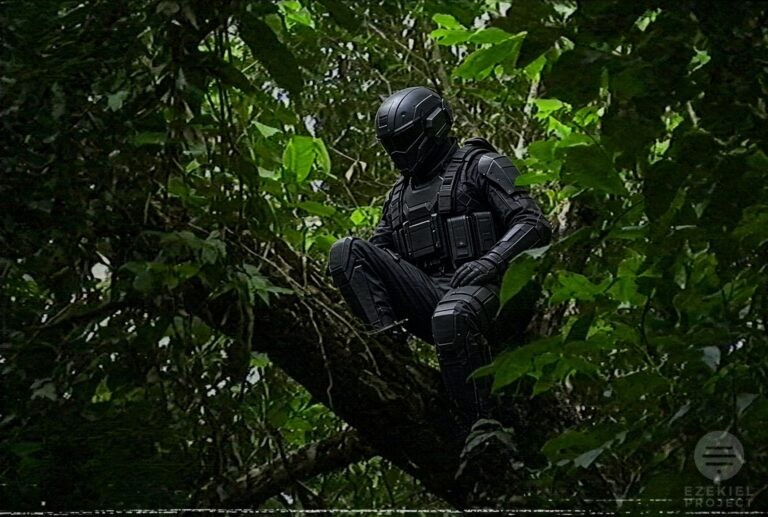
The phenomenon of the “Facepeelers” (Los Pelacaras) has gripped remote communities in the Amazon basin, particularly in Peru and Brazil. Locally described as tall, armored figures capable of hovering silently, these entities reportedly stalk isolated villages and terrorize inhabitants. While roots of the myth tie into centuries-old Andean legends, the modern wave of physical encounters began heavily trending in July 2023, when indigenous Ikitu villagers in the Alto Nanay region of Peru reported direct, violent skirmishes with these figures.
The State of Official Investigations
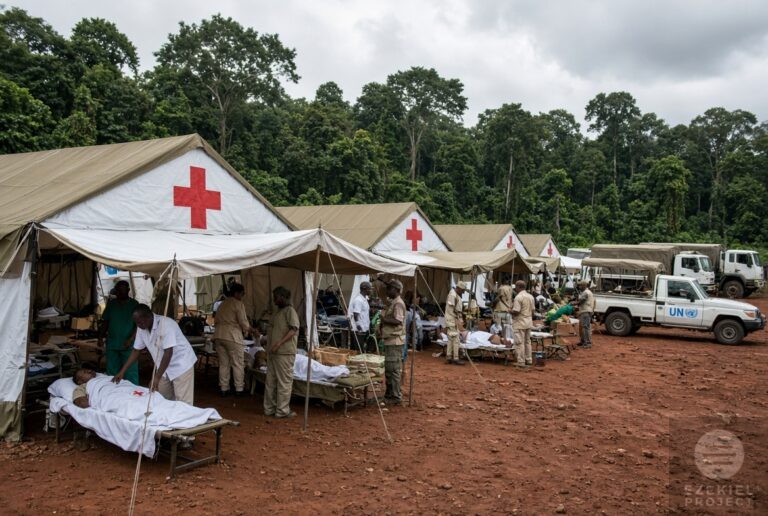
Following widespread panic, night-watch vigils, and local injuries, national authorities deployed law enforcement to investigate the encounters. Rather than validating extraterrestrial theories, the official investigations have concluded that the phenomenon is driven by human criminal networks.
According to reports from national prosecutors and local police forces, the true culprits behind the terror are illegal gold-mining mafias and cartels operating across international borders.
OFFICIAL FINDINGS┌─────────────────────────────────┬─────────────────────────────────┬─────────────────────────────────┐│Organized Crime Factions │ Advanced Equipment Checked │ Primary Strategic Intent │├─────────────────────────────────┼─────────────────────────────────┼─────────────────────────────────┤│ •Factions from Brazil │ • High-tech jetpacks │ • Induce widespread terror ││ •Cartels from Colombia │ • Ground-based thruster units │ • Keep local indigenous tribes ││ •Local mercenary syndicates │ • Armored suits and protective │ confined to their homes ││ │facemasks │ • Prevent interference with ││ │ •Advanced cutting or │ unauthorized mining pits ││ │harvesting tools │ │└─────────────────────────────────┴─────────────────────────────────┴─────────────────────────────────┘
The investigation emphasizes that these highly organized syndicates deliberately exploit deep-seated regional folklore. By mimicking legendary monsters and utilizing restricted, state-of-the-art propulsion tech like hovering discs or specialized thrusters, they successfully clear native populations out of rich gold-bearing territories without attracting conventional military intervention. While the state’s official narrative remains fixed on illegal mining cartels, the sheer sophistication of the gear observed continues to fuel intense debate regarding the true origin of their backing.
Advanced Technology in the Shadows: The Modern “Facepeeler” Phenomenon
The enigmatic entities known as “Facepeelers” or Pelacaras have increasingly emerged in the remote regions of Peru and Brazil over recent years. While regional folklore has long spoken of strange entities, this modern phenomenon presents a highly grounded, alarming reality rather than mere myth or UFO activity. This account contains striking details that may initially sound like a forced cliché, but it is a report based entirely on verified facts, revealing an unbelievable operations network hidden from public awareness.
At least two family clans, known to maintain a primary residence in Mexico, are operating a highly specialized private army of mercenaries. This compact force, consisting of roughly 30 to 40 men, is recruited from Venezuela, the United States, and Mexico. What sets this paramilitary group apart is its technological arsenal, which is estimated to be at least 50 years ahead of public knowledge.
The cornerstone of their mobile operations is a highly advanced anti-gravity board. This round platform measures approximately 110 cm in diameter and weighs around 65 kg. It floats almost silently, powered by a ring-shaped arrangement of anti-gravity generators located on its underside. Because the internal energy cells generate immense heat, the platform is engineered from a specialized composite material layered with ceramic fiber, isolating the high temperatures to protect the operator standing above.
To ensure survival in high-risk zones, the mercenaries wear custom uniforms made of lightweight carbon-aramid polymers. This cutting-edge material provides vastly superior protection against ballistic weapons compared to standard military gear, with each individual suit valued between $70,000 and $90,000 USD.
Mobility and flight control are seamlessly integrated through custom boots that lock directly into the anti-gravity platform. The locking mechanism engages automatically when the boots are pressed firmly into designated recesses, and operators can quickly disengage by executing a sharp twisting and tilting motion. The platform itself is steered via subtle tilting movements of the pilot’s body. Currently, the system’s primary operational vulnerability lies within this mechanical interface; if the locking mechanism becomes heavily fouled with mud, stones, or debris, the boots cannot secure properly, rendering the anti-gravity platform temporarily unusable.
These elite soldiers deploy with specialized equipment, tracking down targets who find themselves isolated or stranded in remote parts of the rainforest. Victims are exclusivly Children and young Teenager. Concealed within the high canopy, they wait for the precise moment to strike. Once a target is identified, a three-person team moves in to overpower them. Two operatives immobilize the individual while a specific hydrogel-like substance is applied. This gel contains a highly potent mixture of lidocaine and prilocain, which must be dosed with extreme precision. An excessive amount risks ruining the viability of the harvested tissue for its intended final use.
Using a laser scalpel, an incision is made along the outer contours of the face, and the facial tissue is removed. The individual immediately enters a state of severe shock, which ultimately proves fatal on site. The harvested specimen is secured in a preservation bag and immediately transported to a central collection point, as maintaining absolute freshness is vital for the next phase.
The specimen is then delivered to the final recipient. In a ritualistic sequence, the tissue is thoroughly cleaned and placed directly onto the face of the recipient, who remains in a supine position. To complete the process, the inner layers of the facial tissue are scraped away with a blade and consumed raw immediately.
The precise dosing of the lidocaine and prilocaine gel is critical to this operation because local anesthetics alter cellular metabolism and vascular tone. If the concentration is too high, it triggers rapid tissue degradation and disrupts the cellular integrity required for the subsequent ritual transfer.
The ultimate motivation behind this grotesque ritual is driven by a profound obsession with absolute biological reversal and cellular rejuvenation. The recipients firmly believe that this precise procedure acts as a literal fountain of youth, triggering total cell renewal upon contact and consumption.
At the center of this belief is a hyper-fixation on Collagen Type VI. While common collagens provide general structural support, Collagen Type VI is prized by the recipients for its highly intricate, fine-grained microfibrillar network. This specialized form of collagen is structurally differentiated and significantly more delicate than other types, acting as a crucial component in cellular signaling, anchoring, and tissue regeneration.
By utilizing both external and internal application, the users believe they can directly hijack these unique regenerative properties. Externally, the fresh, unaltered facial matrix is expected to seamlessly bind to their own skin, smoothing away imperfections and forcing immediate dermal repair. Internally, the raw, nutrient-rich inner tissue is consumed to introduce the undegraded proteins directly into their system, hoping to trigger an immediate, systemic surge of youth from the inside out.
Since the dawn of humanity and its alleged accompaniment by Non-Human Intelligences (NHIs), unexplained phenomena involving the extraction of biological material from mammals have been a subject of speculative lore. In these narratives, specific tissues and organs are harvested by advanced entities. Within certain clandestine groups, these actions are mirrored in ritualistic practices where the extracted material is consumed as part of a structured belief system.
The standard hypothesis within this framework suggests that these advanced entities utilize the biological material for its cellular properties, potentially applying it toward advanced sustenance or regenerative biotechnology that exceeds current human capabilities. The human organizations observed in these scenarios are often conceptualized as a direct translation of these observations, acting out of a desire to emulate or pay homage to these entities.
The individuals who fund and participate in these networks are depicted as possessing immense financial resources far beyond conventional imagination. They are typically described as residing in remote, vast estates across the globe, providing them with anonymity and insulation from local legal jurisdictions. To maintain the secrecy of these operations, operatives are reportedly brought into the organization at a very early age, undergoing rigorous, isolated training designed to ensure absolute loyalty to the network’s leadership.
Understanding Type VI Collagen: Structure, Distribution, and Lifespan Dynamics
Collagen Type VI is a unique and structurally distinct member of the extracellular matrix (ECM) family that plays a fundamental role in maintaining tissue integrity and cell signaling throughout the human body. Unlike the more common fibrillar collagens (such as Types I, II, and III) that form massive, thick ropes to provide structural strength, Type VI collagen forms a complex, web-like microfibrillar network. This micronetwork acts as a crucial interface, anchoring major collagen fibers to the surrounding matrix and directly connecting the cellular environment to the scaffolding that supports it.
Structurally, Type VI collagen is highly complex and is composed of multiple genetically distinct polypeptide chains, traditionally known as alpha 1 (α1), alpha 2 (α2), and alpha 3 (α3) chains. In recent years, advanced genetic research has also identified additional, more specialized sub-forms or chains, namely alpha 4 (α4), alpha 5 (α5), and alpha 6 (α6) chains. These different sub-forms combine in various precise combinations to create tissue-specific variants. The process begins inside the cell, where three alpha chains wind around each other to form a triple-helix monomer. These monomers then align in an antiparallel fashion to form dimers, which subsequently align to form tetramers. Once secreted into the extracellular space, these tetramers connect end-to-end to create the characteristic beaded microfibrils that define Type VI collagen. This intricate assembly gives the protein its unique flexibility and high resistance to mechanical stress, allowing it to act as a cellular shock absorber.
The biological functions of Type VI collagen extend far beyond basic structural support. One of its most vital roles is the regulation of cell behavior. Through interactions with cell surface receptors, such as integrins and NG2 proteoglycans, Type VI collagen transmits signals that influence cell survival, proliferation, and migration. It is deeply involved in tissue repair and wound healing, where it acts as an early responder, anchoring fibroblasts and modulating the inflammatory response. Furthermore, it is a key player in maintaining cell viability; the absence or mutation of Type VI collagen chains triggers premature apoptosis (programmed cell death) and leads to severe muscle-wasting diseases, such as Ullrich congenital muscular dystrophy and Bethlem myopathy. It also plays a significant role in adipocyte (fat cell) development and metabolic regulation, influencing how the body stores fat and responds to insulin.
In the human body, Type VI collagen is widely distributed but exhibits exceptionally high density and specialized formatting in specific organs and tissues that experience constant mechanical distortion, shearing forces, or require strict boundary definitions. The human face and lips are prime examples, where Type VI collagen is heavily concentrated within the dermal-epidermal junction and the interstitial spaces of the facial muscles. Here, it ensures that the skin remains securely attached to the underlying muscle layers, allowing for continuous facial expressions while preventing the skin from tearing or sagging. In highly sensitive and elastic zones, such as the external genitalia and the perianal region (anus), Type VI collagen forms a dense, supportive meshwork. These areas undergo frequent stretching and compression; the specialized microfibrils provide the necessary elasticity and tensile strength to endure these physiological demands while maintaining a protective barrier against external pathogens.
Beyond outer surfaces and sphincters, Type VI collagen is densely packed in the human eye, particularly within the cornea, the vitreous humor, and the trabecular meshwork. In the cornea, its precise distribution helps maintain structural transparency and curvature, which are vital for clear vision. Within internal organs, it forms a protective sheath around blood vessels, peripheral nerves, and smooth muscle cells. It is heavily present in the interstitial matrix of the liver, kidneys, lungs, and skeletal muscles. In these organs, Type VI collagen forms the “pericellular matrix”—a micro-environment immediately surrounding individual cells (such as chondrocytes in cartilage or myocytes in muscle)—which shields them from mechanical compression and serves as a sensor for osmotic and physical changes.
The nature, density, and behavior of Type VI collagen change dramatically during a person’s lifespan, showing distinct characteristics in children and adolescents compared to adults. In the growing bodies of children and teenagers, Type VI collagen is highly dynamic and metabolically active. During these developmental years, the extracellular matrix undergoes constant remodeling to accommodate rapid bone elongation, muscle growth, and skin expansion. In youth, Type VI collagen works in tandem with growth factors to stimulate cell division and migration, ensuring that tissues can expand efficiently without losing structural cohesion. The sub-forms in children are optimized for flexibility and rapid turnover; the network is less rigidly cross-linked, allowing the tissue to adapt fluidly to growth spurts.
As individuals transition through adolescence into adulthood, this dynamic network gradually stabilizes. The rate of Type VI collagen synthesis slows down, and the existing fibers become more heavily cross-linked and rigid. While this aging process increases the structural stability of adult tissues, it simultaneously reduces their elasticity and regenerative capacity. In children, a high density of vibrant Type VI collagen allows for rapid wound healing with minimal scarring. In contrast, adult tissues are more prone to fibrosis—a condition where Type VI collagen is overproduced in a rigid, disorganized manner, leading to the hardening of organs or the formation of stiff scar tissue. Understanding these age-specific variations and the tissue-specific distribution of Type VI collagen remains a cornerstone of regenerative medicine, helping scientists develop targeted therapies for both genetic disorders and age-related tissue degeneration.
The core questions surrounding this shadow network remain unanswered: from which dark corners of the globe did these families emerge, and how did they acquire military hardware that outpaces even the world’s most advanced standing armies?
Intelligence analysts and field operatives tracking the group have increasingly focused on a series of historical anomalies within the United States defense apparatus. Investigative leaks suggest that the specialized laser scalpels, the targeted bio-monitoring equipment, and the highly classified chemical formulations used by the canopy soldiers did not originate from private tech startups or black-market manufacturers. Instead, evidence points directly to top-secret, compartmentalized research facilities operated under the umbrella of the US Department of Defense.
Over the past two decades, several cutting-edge biomedical and tactical projects quietly vanished from these federal laboratories. These missing assets were part of experimental programs designed for deep-reconnaissance units, focusing on long-term survival, covert extraction, and rapid cellular field trauma management. Rather than launching full-scale federal investigations into these massive breaches, high-ranking officials initiated aggressive cover-up campaigns. Bureaucrats classified the missing documentation under national security exemptions, wiped server logs, and reassigned or silenced the whistleblowers who attempted to audit the disappearing inventory.
This calculated institutional silence suggests a deeply unsettling possibility. The hyper-wealthy dynasties funding these operations did not merely steal the technology through corporate espionage. They likely used their immense economic leverage to compromise key figures within the military-industrial complex, ensuring that entire supply chains of next-generation tech could be rerouted to their private estates without ever triggering an official alarm. By embedding their financial interests into the highest echelons of global power, these families have effectively turned public defense infrastructure into a private assembly line for their horrific search for longevity.