Recent leaks from disclosure initiatives have reignited a long-standing debate within the aerospace and defense communities. For decades, the concept of instantly moving physical matter through space was relegated to science fiction. However, whistleblowers now claim that Project GATE (Global Advanced Transport Environment) is a highly classified Pentagon initiative aimed at the tactical teleportation of aircraft via engineered portals.
According to unauthorized disclosures, the foundation of this technology does not stem from human innovation. Instead, it is allegedly derived from reversed-engineered Non-Human Intelligence (NHI) technology.
The Energy Bottleneck: Limitations of Human Infrastructure
While the theoretical framework provided by NHI assets allows for the bending of spacetime, human replication of this technology faces a severe bottleneck: power generation.
NHI crafts reportedly utilize compact, highly efficient energy sources—such as stable superheavy elements or localized antimatter reactions—that human science cannot yet safely reproduce. Because creating a stable portal requires an exponential amount of energy, human reverse-engineered attempts are severely limited in operational range.
Based on current human energy components, scientists estimate the physical limitations of these tactical jumps:
The Power Source: To open a portal large enough for a standard fighter jet, engineers would need to tap into dedicated multi-gigawatt power grids, likely drawing from advanced next-generation nuclear fission reactors or experimental tokamak fusion facilities.
The Maximum Range: Due to the rapid decay of the portal’s stability and the immense energy bleed, a human-engineered “jump” is strictly limited to short distances. According to current engineering capabilities, the maximum theoretical distance for teleporting a macroscopic object like an aircraft is estimated to be between 5 to 15 kilometers (3 to 9 miles).
The Cooldown Factor: Generating the required peak power is not a continuous option. A single short-distance jump would likely deplete local energy storage arrays (such as advanced homopolar generators or massive capacitor banks), requiring hours or even days to recharge for a subsequent gate activation.
Tactical Application
Even with a restrictive 10-kilometer range, the tactical advantages of Project GATE would be monumental. It would allow aircraft to instantly bypass dense anti-air defense networks, escape incoming missile locks, or materialize behind enemy lines undetected by traditional radar during the transition phase.
While mainstream academia maintains that macroscopic teleportation remains impossible, the whispers surrounding Project GATE suggest that the barrier between science fiction and black-budget reality is thinner than ever.
The Anatomy of a Jump: Physical and Visual Phenomena
Witnessing a Project GATE activation would challenge the limits of human perception. According to theoretical models opening a spacetime rift is not a silent, seamless event. It is a violent, visually spectacular disruption of local physics.
The transition sequence consists of three distinct phases:
1. The Horizon Genesis (Pre-Jump)
Before the aircraft enters the portal, the intense electromagnetic and gravitational fields warp the surrounding atmosphere.
The Gravitational Lens: The air around the gate coordinates appears to “shimmer” and bend, similar to a severe desert heat mirage but perfectly spherical. Light from behind the portal is distorted, creating a visual halo effect.
Cherenkov Radiation & Corona Discharge: As the power grid dumps gigawatts of energy into the focal point, the air ionizes. Witnesses would see a brilliant, electric-blue glow—similar to Cherenkov radiation seen in nuclear reactors—accompanied by spiderwebs of static lightning branching out into the immediate environment.
2. The Event Horizon (The Threshold)
The portal itself does not look like a sci-fi “liquid door,” but rather a localized optical anomaly.
The Obsidian Mirror: At the exact center of the ionization zone, a perfect sphere of absolute darkness forms. Because gravitational forces prevent light from escaping or passing through normally, it appears as a floating, featureless black void that absorbs all ambient light.
The Spatial Crinkle: As the aircraft crosses the threshold, it does not slowly sink into the portal. To an outside observer, the aircraft appears to flatten or “pancake” into a two-dimensional silhouette before instantly vanishing. This is a visual illusion caused by the extreme contraction of space along the axis of travel.
The Power Infrastructure: Tokamak Fusion Facilities as Portal Catalysts – A Theory of Energy Infrastructure
To generate the astronomical energy densities required to tear the fabric of spacetime, standard electrical grids are utterly useless. Bending reality demands a power source that operates on a cosmic scale. This is where modified Tokamak fusion facilities come into play, serving as the primary power catalysts for Project GATE.
The implementation of this dual human-NHI infrastructure relies on three core engineering breakthroughs:
The Captive Star: A standard Tokamak utilizes powerful magnetic fields to contain a donut-shaped ring (torus) of hydrogen plasma heated to temperatures hotter than the core of the sun. While commercial fusion concepts focus on slow, sustained energy output, the military-grade Tokamaks driving Project GATE are engineered for ultra-high-yield pulse discharges.
NHI Hybrid Superconductors: Human-engineered Tokamaks traditionally struggle with plasma instability and magnetic degradation. The EP suggest that the GATE reactors utilize reverse-engineered NHI meta-materials within their electromagnetic coils. These advanced alloys allow the magnets to achieve unprecedented Tesla ratings without overheating, maintaining absolute control over the plasma even during violent energy spikes.
The Gigawatt Pulse (The Discharge): At the exact millisecond of the Horizon Genesis, the portal grid triggers a total energy siphon. Multi-gigawatt bursts of electricity are funneled out of the plasma torus through massive flux-compression generators directly into the portal coordinates. This sudden drain causes the plasma inside the Tokamak to nearly collapse, explaining the mandatory cooldown and recharging cycle. The reactor requires hours to re-ignite, stabilize, and reheat the plasma loop before another short-range jump can be attempted.
Subterranean Energy Conduits: Due to radiation hazards and extreme secrecy, these specialized Tokamaks are buried hundreds of meters beneath secure testing grounds. Because the portal cannot be safely opened inside the reactor room, the massive energy pulse is directed outward via vacuum-insulated, superconductive wave-guides. These conduits channel the raw power to the surface “GATE Terminals,” where it erupts into the atmosphere, ionizing the air into the striking blue Cherenkov corona seen right before the aircraft vanishes.
Maritime Anomalies: Open-Water Testing and the Hydro-Energy Nexus
While subterranean desert facilities offer visual isolation, some whistleblowers argue that the true crucible of Project GATE testing occurs over open water. Testing a space-tearing, reverse-engineered NHI technology requires trillions of gallons of a natural heatsink, making remote maritime environments the ideal proving grounds.
The most prominent tactical and logistical reasons for open-water deployment involve two specific oceanic sectors:
1. AUTEC and the “Tongue of the Ocean” (Andros Island, Bahamas)
Deep within the British-American classified testing networks lies the Atlantic Undersea Test and Evaluation Center (AUTEC). Situated on Andros Island, it sits adjacent to a deep, natural oceanic trench known as the “Tongue of the Ocean”—a 6,000-foot-deep chasm surrounded by shallow reefs.
The Ultimate Thermal Heatsink: The primary limitation of a Tokamak fusion reactor is thermal management during a multi-gigawatt pulse. By constructing subterranean fusion facilities beneath the coral limestone of Andros Island, the military can utilize deep, freezing ocean water to instantly cool the reactor’s superheated magnetic coils after a portal discharge.
The Steam Visual Shield: When a short-range portal opens mere feet above the ocean surface, the immense electromagnetic field causes immediate flash-boiling of the saltwater. The Cherenkov radiation blue glow is instantly shrouded by a massive, synthetic fog bank. To satellite surveillance, a 10-kilometer aircraft teleportation looks like nothing more than a sudden, localized meteorological event—a brief thermal plume or sea-smoke anomaly.
2. The Pacific Pacific Missile Range Facility (PMRF, Kauai, Hawaii)
For long-range tactical integration, the Pacific Missile Range Facility (PMRF) in Barking Sands, Kauai, provides the world’s largest instrumented multi-environment testing range.
Acoustic Disguise: The Sonic Implosion caused by the portal snapping shut creates a deafening acoustic shockwave. Over populated desert regions, this creates seismic rumbles that draw public scrutiny. Over the vast expanse of the Pacific, these multi-bar acoustic cracks are easily masked as natural tectonic shifts, underwater volcanic venting, or standard naval ordnance testing.
Radar Discontinuity Protocols: PMRF is heavily monitored by foreign radar and reconnaissance satellites. To counter this, Project GATE testing over the Pacific utilizes specialized aerosol dispersion. Right before the Tokamak pulse fires, military ships release advanced chaff and radar-absorbent particulate clouds into the 10-kilometer transit zone. When the aircraft disappears from Point A and materializes at Point B, the transition happens entirely hidden within a pre-planned electronic warfare blind spot.
The Maritime Deployment Sequence
Unlike land-based tests which rely on static concrete pads, an open-water jump requires a highly synchronized naval choreography:
- The Anchor Vessel: A nuclear-powered supercarrier or a specialized stealth barge acts as the primary focal coordinator, housing the surface waveguide terminals linked to the underwater fusion grid.
- The Vector Tunnel: The aircraft approaches the carrier at low altitude. As the Tokamak below discharges, the entrance gate opens directly in the flight path of the jet.
- The Marine Displacement: The aircraft vanishes into the Obsidian Mirror, leaving a wake of displaced water and displaced air that creates an instantaneous 15-foot rogue wave beneath the portal’s epicenter. Milliseconds later, it emerges 10 kilometers away, its engines already relit, clearing the secondary naval perimeter without ever occupying the physical space between them.
The Mojave-Great Basin Nexus: Subterranean Operations at Dugway Proving Ground
While maritime environments provide an excellent thermal heatsink, the ultimate crucible for isolating Project GATE from foreign espionage is the Dugway Proving Ground (DPG) in Utah. Located roughly 85 miles southwest of Salt Lake City, Dugway is a vast, hyper-restricted military expanse roughly the size of Rhode Island. It is bordered on three sides by mountain ranges and sits adjacent to the Nevada National Security Site.
For a project utilizing reverse-engineered Non-Human Intelligence (NHI) technology and dangerous Tokamak fusion pulses, Dugway provides the perfect infrastructure for deep-earth deployment.
+------------------------------------------------------------+| DUGWAY PROJECT GATE COMPLEX (CROSSSECTION) |+------------------------------------------------------------+| || [Surface Gate Terminal A] ---- 10 km ----> [Terminal B] || | ^ || | (Vacuum Waveguide) | || v | || ======================================================== || DEEP UNDERGROUND BEDROCK (800m) || ======================================================== || | || v || [Subterranean Tokamak Reactor] -------------------------+| |+------------------------------------------------------------+
1. The Bedrock Bastion: Deep Underground Military Bases (DUMBs)
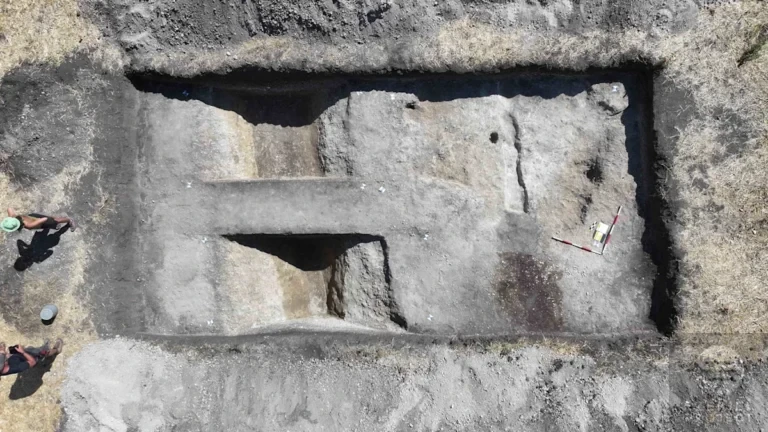
Dugway is renowned for its highly classified underground testing labs, specifically the West Desert Test Center. Whistleblower leaks suggest that the Tokamak fusion reactors driving the portal experiments are buried more than 800 meters (2,600 feet) beneath the desert floor, carved directly into stable granite bedrock.
Seismic and EMP Containment: When the Tokamak dumps its multi-gigawatt load to open a spatial rift, it creates a massive Electromagnetic Pulse (EMP) and minor seismic tremors. The deep granite acts as a natural Faraday cage and shock absorber, preventing these anomalies from being detected by civilian seismographs or commercial electronic equipment in Utah.
The Magma-Well Heat Sink: Lacking an ocean for cooling, Dugway’s engineers allegedly utilize deep, subterranean aquifers and closed-loop geothermal cooling grids to dissipate the immense thermal energy generated by the hybrid NHI super-magnets.
2. The Atmospheric Vacuum: Managing the “Sonic Implosion”
One of the greatest hurdles of testing Project GATE on land is the Sonic Implosion—the violent acoustic crack caused by air rushing into the void left by the teleported aircraft. In a standard environment, this would shatter windows for miles.
The Salt Flat Buffer: Dugway’s vast, barren salt flats provide an acoustic buffer zone. The portal terminals are positioned in high-altitude, low-humidity sectors of the range. The dry, low-density desert air slightly dampens the propagation of the acoustic shockwave.
Thunderstorm Masking: To further obscure the sound, test flights are notoriously synchronized with local meteorological events. The deafening, metallic crack of a 10-kilometer spatial jump is perfectly timed to coincide with the natural thunderclaps of summer microbursts and desert storms that frequently sweep across the Great Basin.
3. Satellite Blind Spots and the “Dugway Mirage”
Because foreign reconnaissance satellites constantly monitor the skies above Utah, the physical and visual anomalies of the jump—such as the electric-blue Cherenkov corona and the appearance of the Obsidian Mirror—must be shielded from orbital optics.
The Ionized Aerosol Cloak: Prior to a test flight, ground-based generators at Dugway release a proprietary, ionized aerosol cloud over the 10-kilometer transit corridor. This cloud acts as an optical and radar-deflecting chaff. To an orbital satellite, the area looks like a standard hot-air mirage or a localized dust storm.
The 30-Second Window: Dugway controllers utilize precise orbital mechanics data to calculate “satellite blind spots”—brief windows where no foreign synthetic-aperture radar (SAR) or optical satellites have a direct line of sight. The entire Tokamak cycle, from plasma ignition to the aircraft’s 10-kilometer jump and final portal collapse, is executed within a strict 30-second operational window.
By the time the next satellite passes overhead, the aircraft is flying normally on a completely different trajectory, leaving behind nothing but a fading ozone scent and a cooling patch of desert air.