Introduction
This protocol reconstructs the tactical timeline of a highly classified maritime encounter involving the Sturgeon-class submarine USS Trepang (SSN-674) in the Atlantic Ocean. The incident documents the visual detection, escalation, and subsequent neutralization of an unidentified aerial phenomenon (UAP) using an ASTOR tactical nuclear weapon. This log serves as a scientific and military record of foreign object behavior under electromagnetic disruption, thermal anomalies during ocean impact, and the biological retrieval of non-human survivors.
Terminology and Abbreviations
- USS: United States Ship.
- CINCLANT: Commander in Chief, Atlantic Fleet. A major military command of the United States Navy responsible for operations in the Atlantic Ocean.
- CIA: Central Intelligence Agency. The primary civilian foreign intelligence service of the United States federal government.
- UAP: Unidentified Aerial Phenomenon. The scientific and military designation for airborne objects that cannot be immediately identified or explained.
- Mark 45 ASTOR: Anti-Submarine Torpedo. A nuclear-armed torpedo utilized by the US Navy during the Cold War.
- W34 Warhead: A tactical nuclear warhead used in the ASTOR system, possessing an explosive yield of approximately 11 kilotons of TNT.
- EMP: Electromagnetic Pulse. A burst of electromagnetic radiation that disrupts, damages, or destroys electronic and power systems.
Incident Log
March 23, 1971
14:22 Hours
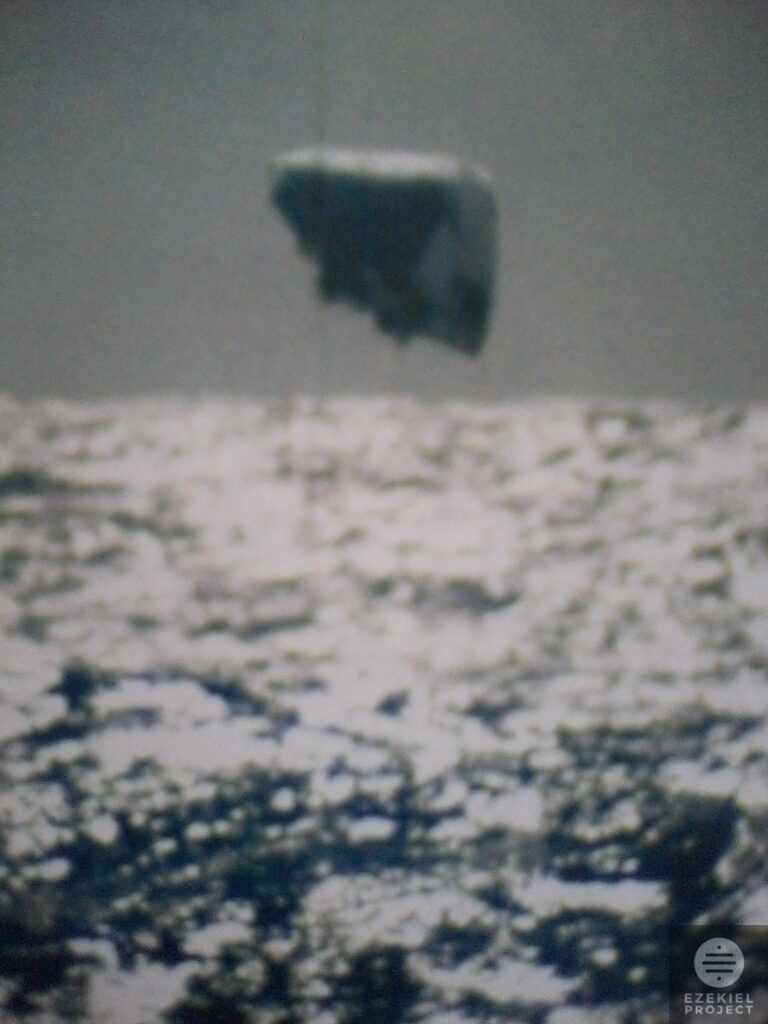
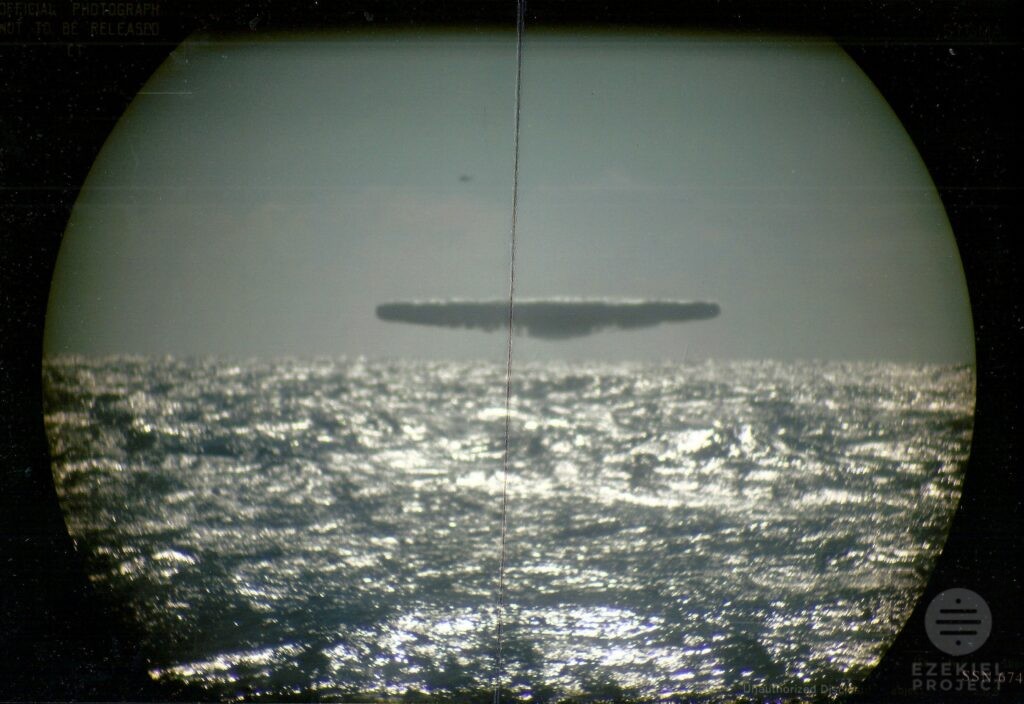
The USS Trepang establishes visual contact with an anomalous object hovering motionlessly above the ocean surface. Initial structural measurements estimate the object’s width at approximately 295 feet, maintaining a stable altitude of roughly 262 feet above the water.
14:25 Hours
The contact is reported directly to Commander Dean Reynolds Sackett Jr. After observing the object for several minutes, the Commander proceeds to the radio room. Securing the space to include only himself and the radioman, he contacts CINCLANT. CINCLANT immediately coordinates with the CIA to request specialized operational guidance regarding the object. Concurrently, the Trepang increases its standoff distance and executes a 90-degree turn. This maneuver exposes the object’s full profile, with updated width estimations increasing to a range between 787 and 886 feet.
14:31 Hours
Commander Sackett remains secured in the radio room with the radioman, maintaining a direct communication link with CINCLANT. During ongoing tactical updates, the object undergoes a perceived structural expansion or orientation shift, with the full visible width now measured between 1,181 to 1,345 feet.
17:10 Hours
Operational orders are received from CINCLANT, acting on direct authorization from the CIA. The directive states that if the object remains stationary, it must be neutralized. The Trepang is ordered to secure any debris, wreckage, or crew members. Strict CBRN (Chemical, Biological, Radiological, and Nuclear) protocols are mandated for the retrieval team due to high risks of localized radiation leakage.
The tactical directive instructs the Trepang to position a Mark 45 ASTOR torpedo, equipped with a W34 nuclear warhead, directly beneath the object and execute a remote detonation.
17:33 Hours
The Mark 45 ASTOR torpedo is armed and launched. The USS Trepang establishes a safe escape and observation distance of 15,748 feet (approx. 3 miles) from the target zone.
17:37 Hours
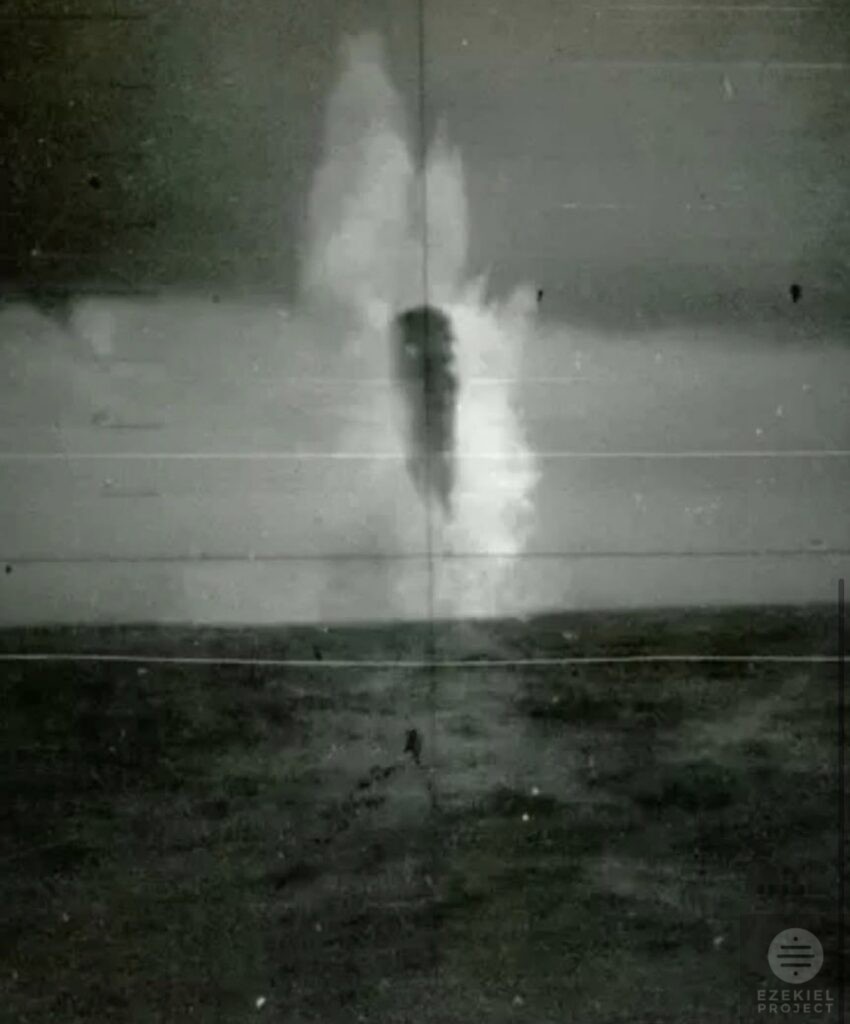
Four minutes post-launch, the torpedo reaches its destination coordinates. Remote detonation is successfully triggered at a shallow depth of approximately 12.5 feet directly beneath the hovering object.
17:38 Hours
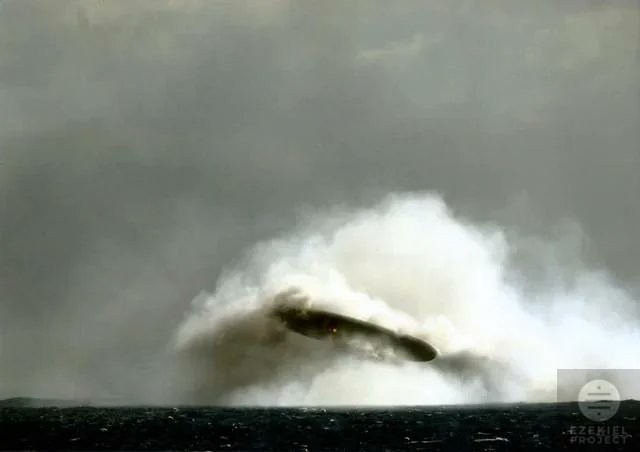
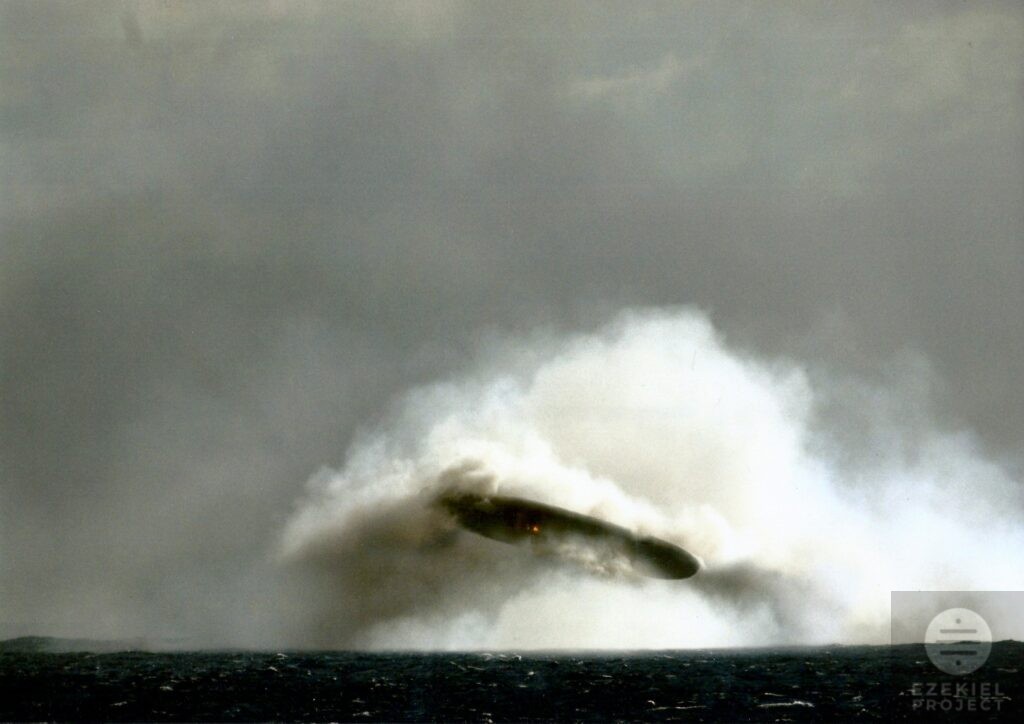
The nuclear detonation occurs. The resulting electromagnetic pulse (EMP) successfully compromises the object’s internal power grid, causing an immediate failure of all onboard reactors. The craft manages to maintain a horizontal position for approximately one minute before tilting sharply along its longitudinal axis. It plunges directly into the Atlantic Ocean and begins to sink.
Upon marine impact, extreme thermal energy causes the surrounding seawater to instantaneously boil and vaporize. Two visible survivors are observed near the impact site, exhibiting severe flash burns across their faces and extremities; one survivor suffers a traumatic amputation of the lower leg.
18:35 Hours
Debris and biological entities are sighted on the surface. A total of five crew members from the craft survive the crash and are recovered from the water by the Trepang crew using standard liferaft rescue procedures.
Biological assessment notes that the recovered entities measure between 4 and 5 feet in height. They possess gray skin with a distinct, faint greenish luminescence.
Analytical Conclusion
Post-incident assessment indicates that the unidentified craft had experienced catastrophic maneuverability failure prior to military engagement. The internal energy output of its primary reactors was insufficient to sustain locomotion, leaving the craft locked in a stationary hover until neutralized by the tactical EMP.